
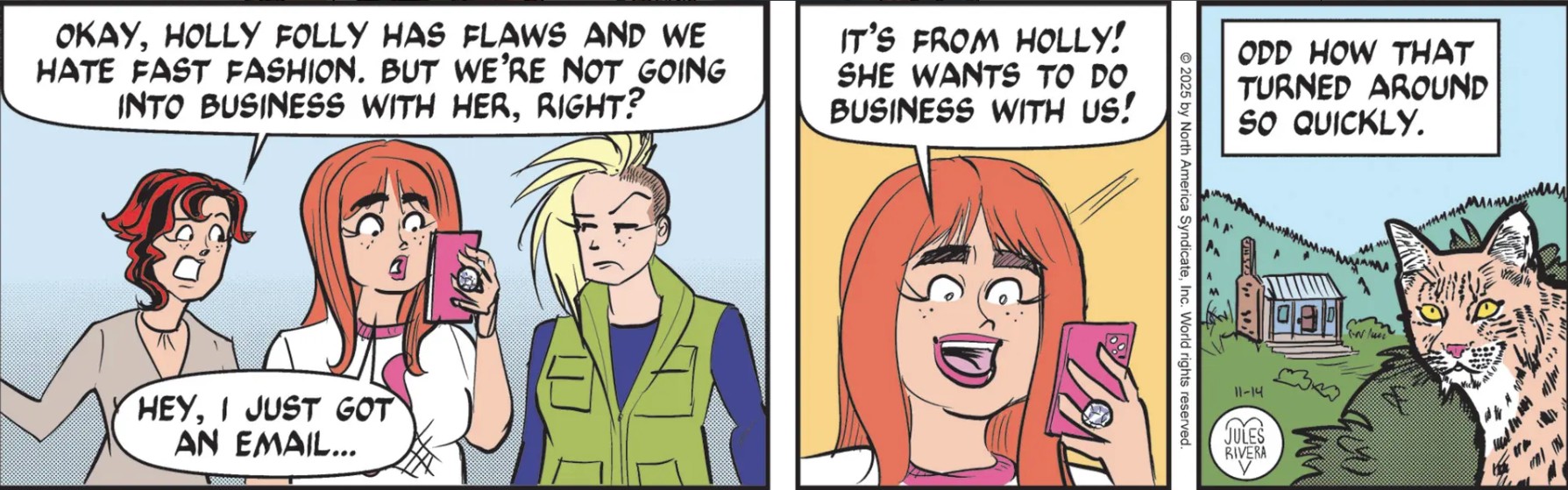
The story trudges along: Cherry and Olive distrust Holly Folly, but Peach is more optimistic. Now, Holly wants to move ahead with a deal. So far, so good.
What might be confusing here is a point of grammar. In Panel 1, Cherry lists some negatives about Holly, then follows up with “But we’re not going into business …” Although I’m no professor of English, I know that when a statement is followed by a “But”, it implies a response that is contrary to the initial statement. For example, “I’d like to make prank phone calls with you today, but I’m busy working on my Great Humanitarian award speech.”
Instead, Jules Rivera has Cherry follow her initial, negative, statement with another negative statement: “Holly Folly is bad. But we’re not going into business with her, right?” A conjunction such as “Therefore” or even “So” would make Cherry’s statement sound correct. “Okay, Holly Folly has flaws and we hate fast fashion. So, we’re not going into business with her, right?”
In Panel 4, Rivera affirms Holly’s message: “Odd how that turned around so quickly.” Okay, what turned around quickly? Peach was already sold on the deal. Did Cherry and Olive suddenly become Holly Folly acolytes? Do they now like fast fashion? Sounds like a classic non sequitur.

 The Daily Trail